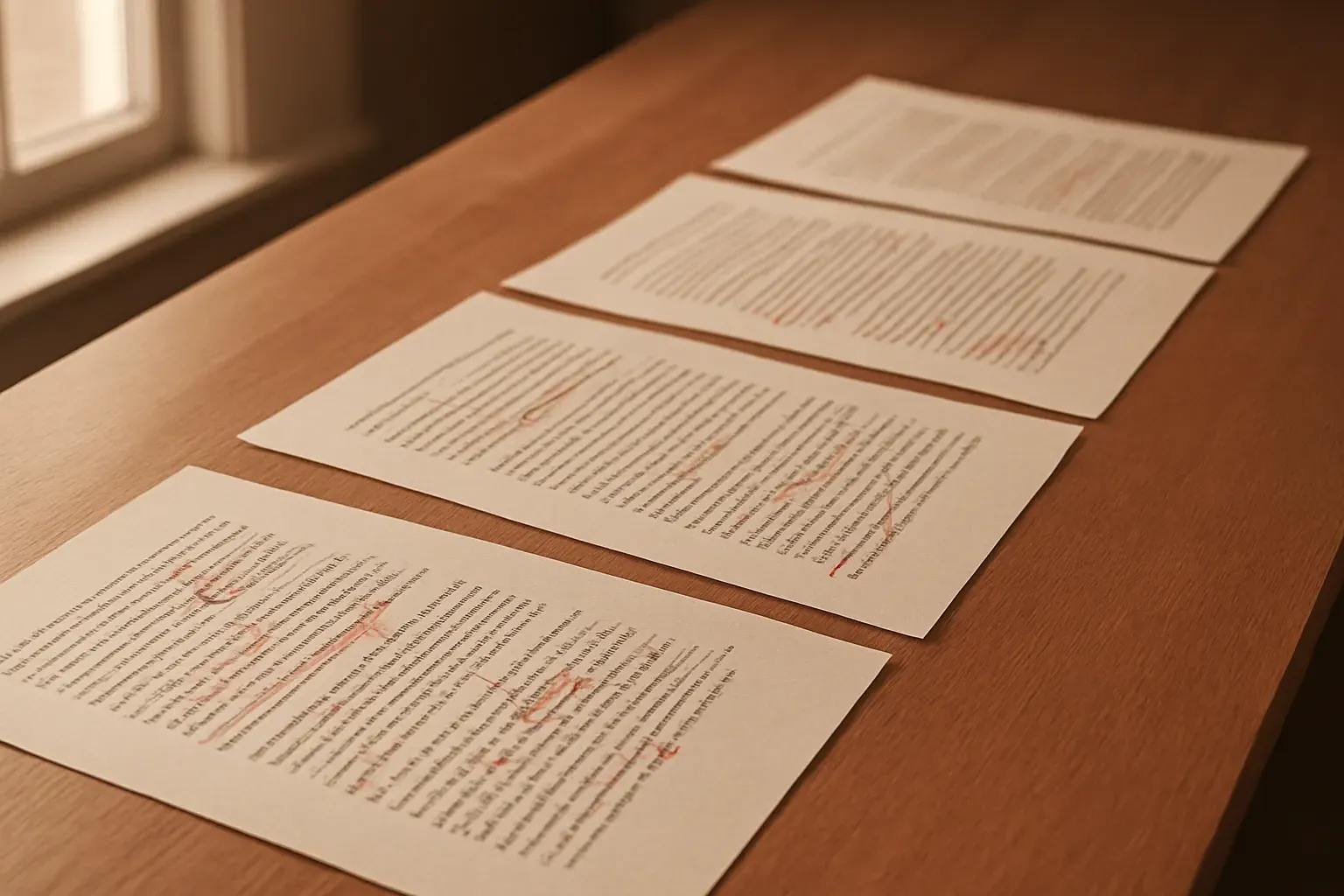
The Voyage Method
A named process, run with the same rigor whether the job is a single blog post or a full bilingual funnel. This is the one thing that doesn't change from project to project.
01
Chart
We map the brief: your audience, your offer, the objections your buyer actually has, your voice, and — critically — which language(s) are in scope and how differently each should be approached. This is where the bilingual claim starts to matter: we decide up front whether Spanish needs its own angle, not assume it's a mirror of the English brief.
What you'll see: a short written brief you can review and correct before drafting starts.
02
Draft
Independent first-pass writing in each required language, against the same chart. If a job is bilingual, both versions are drafted in parallel — never a draft-then-translate step. This is where "written natively" is either true or it isn't, and it's the stage the rest of the process protects.
What you'll see: a first full draft (or drafts) ready for your structural feedback.
03
Refine
Structured revision rounds against the original brief — the number is set by your package tier, not open-ended. We revise against what the brief asked for, not against every passing preference that shows up mid-project.
What you'll see: a revised draft addressing your specific feedback, round by round.
04
Launch
Final delivery in your format of choice — a doc, a CMS-ready file, a spreadsheet for a catalogue — with a short usage note: how and where to use it, and what to test first if it's a page or a sequence.
What you'll see: delivery-ready copy and a short note, not just a file dropped in your inbox.
Same process, every price point
A €180 blog post and a €3,200 funnel go through the same four stages. The scope of each stage changes with the size of the job — the discipline doesn't. That consistency is the guarantee you're actually buying when you can't inspect the craft in advance.
Frequently asked questions
01 What happens if I ask for changes outside the brief?
Refine covers revisions against the original Chart. A change in direction (new audience, new offer) is a scope change, handled as a small addendum rather than an endless revision loop.
02 How many rounds of revisions do I actually get?
Set per package tier (see each service’s pricing table) — typically 1 round on entry tiers, 2–3 on higher tiers.
03 Can I skip Chart if I already have a detailed brief?
We still run a short Chart conversation to confirm scope and language approach — it’s short when your brief is already strong, but it doesn’t get skipped.
04 What if I need both languages but on different timelines?
Tell us during Chart — the two drafts can be sequenced if needed, though they’re still each written independently rather than one converted from the other.